Custom Name Christmas Decor with Deer: A Versatile Digital Asset for Creators
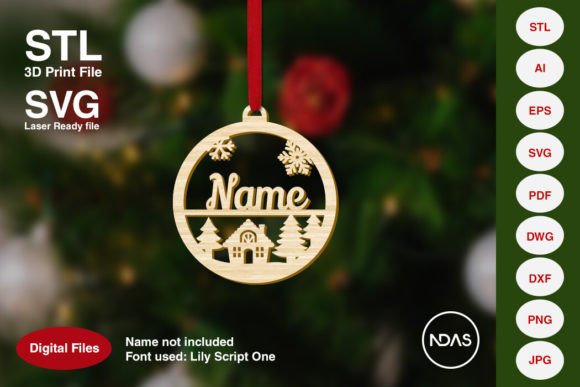
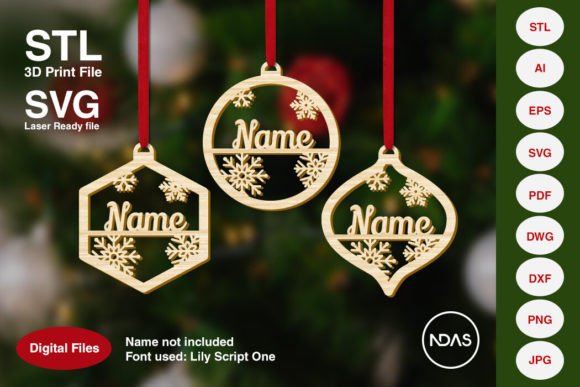
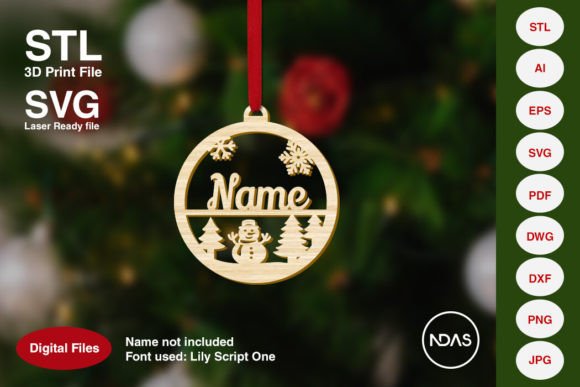
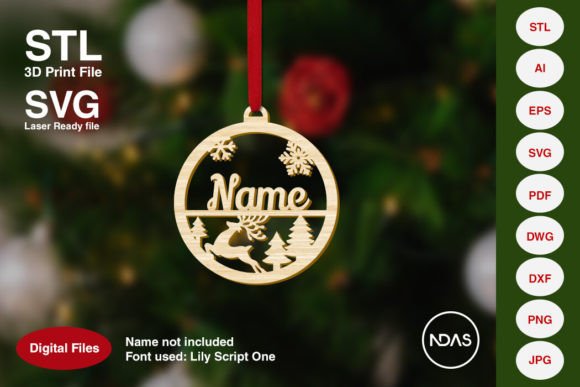
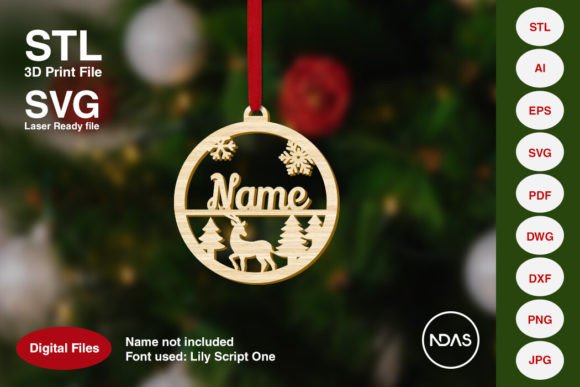
The holiday season often demands a balance between traditional aesthetics and personalized touches that reflect individual family histories. For digital creators, small business owners, and serious hobbyists, the Custom Name Christmas Decor with Deer represents more than just a festive design; it is a highly adaptable resource designed to bridge the gap between digital fabrication and physical craftsmanship. This asset combines the classic imagery of a reindeer, pine forest, and snowflakes with a customizable name element, offering a flexible solution for various manufacturing methods.
Unlike mass-produced ornaments found in big-box stores, this digital package provides the raw materials necessary for high-quality, bespoke production. The inclusion of multiple file formats ensures compatibility across a wide spectrum of hardware, from industrial laser cutters to desktop 3D printers and handheld cutting machines. By evaluating its technical specifications and practical applications, professionals can determine if this specific collection aligns with their current workflow and project goals.
Digital Format Versatility and Technical Specifications
The primary strength of the Custom Name Christmas Decor with Deer lies in its comprehensive file suite. In the professional realm, file compatibility is often the deciding factor in whether a design asset can be utilized immediately or requires time-consuming conversion. This package addresses that bottleneck by providing STL, AI, SVG, EPS, PDF, DXF, DWG, PNG, and JPG files within a single download.
For users working with vector-based software like Adobe Illustrator or CorelDRAW, the AI, SVG, and EPS files offer non-destructive editing capabilities. These formats are essential for scaling designs without losing resolution, a critical requirement when adapting a standard ornament size for different display contexts. The DXF and DWG files cater specifically to CAD (Computer-Aided Design) environments, allowing engineers and CNC operators to import the geometry directly into machining software for precise toolpath generation.
On the additive manufacturing side, the STL file is optimized for 3D printing workflows. While the base dimensions are listed as X 4.1, Y 4.5, and Z 0.25 inches, the nature of STL files allows for significant scaling. Whether a user intends to create a miniature desk ornament or a large-scale architectural model, the mesh data remains intact, provided the printer's build volume accommodates the scaled dimensions. The inclusion of raster formats like PNG and JPG serves as a fallback for quick visualizations or projects requiring image-based processing, though these do not support the same level of precision as the vector counterparts.
Material Compatibility and Fabrication Methods
The design is engineered to perform effectively across a diverse range of substrates. The geometric simplicity and structural integrity of the deer and tree motifs make them suitable for both subtractive and additive manufacturing processes. When utilizing laser cutting technology, the design excels on materials such as plywood, MDF, HDF, and acrylic. These materials are favored for their ability to hold fine details, which is crucial for rendering the intricate antlers and snowflake patterns inherent to the design.
For those focusing on paper crafts or cardstock projects, the SVG and PDF files facilitate use with electronic cutting machines like Cricut and Silhouette. The clean lines of the design ensure that delicate cuts in paper or thin plastic do not tear easily during the ejection process. Similarly, the 3D print capability opens doors for prototyping using PLA, PETG, or ABS plastics. The layer height of 0.25 inches suggests a design intended for moderate thickness, but users can adjust infill density and wall thickness based on the desired rigidity and weight of the final product.
Metalworking enthusiasts may also find value here. While the design does not include specific settings for metal lasers, the vector paths can be adapted for etching or engraving on thin metal sheets. The versatility extends to cardboard, making it an accessible option for educational workshops or temporary installations where durability is less of a concern than cost-effectiveness.
Practical Applications for Professionals and Hobbyists
The utility of Custom Name Christmas Decor with Deer spans several distinct market segments. Small business owners and entrepreneurs can leverage this asset to create unique, high-margin products without the overhead of designing custom graphics from scratch. By personalizing the name field, sellers can offer "made-to-order" services that command higher prices than generic inventory. This approach appeals to consumers seeking gifts that carry sentimental value, such as ornaments commemorating a new baby, a wedding year, or a beloved pet.
Educators and makerspaces benefit from the instructional clarity of the provided files. The consistent geometry allows for predictable results when teaching students about vector manipulation, material properties, and machine calibration. The ability to scale the design means a single lesson plan can accommodate different skill levels, from simple paper cutting exercises for younger students to complex multi-layer wood assembly projects for advanced learners.
Bloggers and content creators focused on DIY crafts can utilize the images and descriptions to generate tutorials or review articles. The visual appeal of the deer and forest theme fits naturally within seasonal content calendars, driving engagement through high-quality examples of finished products. However, it is important to note that while the design assets are included, the physical output depends entirely on the creator's access to appropriate machinery and material sourcing.
Quality Assessment and Workflow Integration
When evaluating the quality of digital design assets, consistency and reliability are paramount. The Custom Name Christmas Decor with Deer appears to maintain a cohesive aesthetic across all provided formats. The integration of the name element with the surrounding graphics is seamless, avoiding common issues such as overlapping paths or broken vectors that often plague poorly prepared files. This attention to detail reduces the troubleshooting time typically required before production begins.
Flexibility remains a key consideration for long-term value. Since the design is scalable, it retains relevance beyond a single project cycle. A creator who initially uses the 2D version for laser-cutting wood might later decide to produce a 3D printed version for a different client base, simply by switching the file format. This adaptability maximizes the return on investment for the digital purchase.
However, potential limitations exist. The design assumes a certain level of technical proficiency in handling the various file types. Users unfamiliar with converting between vector and raster formats, or adjusting layer heights for 3D printing, may face a steeper learning curve. Additionally, the absence of physical items means that the final result is entirely dependent on the quality of the user's equipment and materials. A poorly calibrated laser cutter or a low-resolution 3D printer will yield subpar results regardless of the design's inherent quality.
Strategic Considerations for Implementation
Before integrating this asset into a production line, professionals should consider their specific operational constraints. If the goal is rapid prototyping, the STL file offers the fastest path to a physical model. For retail-ready products, the vector files allow for batch processing on laser cutters, ensuring uniformity across large orders. Marketing teams should highlight the customization aspect in their messaging, as the ability to insert names is the primary driver of consumer interest.
It is also worth noting that the design's simplicity allows for creative modification. Experienced designers can add textures, change fonts for the name, or combine the deer motif with other elements to create entirely new variations. This openness encourages innovation rather than restricting the user to a static template.
In conclusion, the Custom Name Christmas Decor with Deer serves as a robust foundation for holiday-themed production. Its strength lies not in the novelty of the imagery, but in the breadth of its technical implementation. By supporting a wide array of file formats and materials, it empowers creators to execute their vision with precision and efficiency. For those equipped with the necessary tools and a clear understanding of their fabrication methods, this resource offers a reliable pathway to creating meaningful, personalized holiday decorations.