Integrating the Stacked Lemon Vase STL Digital File into Your Creative Workflow
In the rapidly evolving landscape of digital fabrication, the gap between a conceptual idea and a tangible object has never been narrower. For professionals, creators, and small business owners, the ability to iterate quickly is paramount. This is where the Stacked Lemon Vase STL Digital File serves not merely as a 3D model, but as a functional asset within a broader design and production ecosystem. Unlike generic templates that require extensive modification, this specific file offers a unique blend of aesthetic appeal and technical efficiency, making it an ideal candidate for integration into various workflows ranging from rapid prototyping to direct-to-consumer product lines.
Defining the Asset in a Production Context
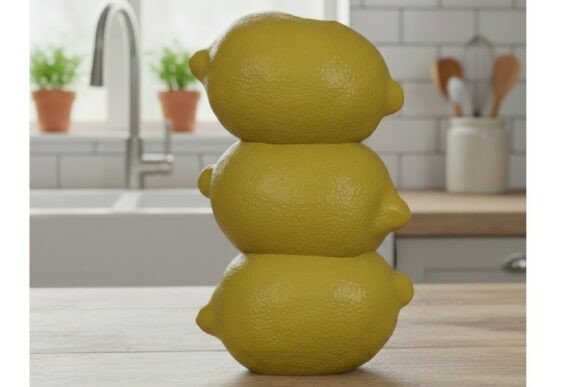
The Stacked Lemon Vase STL represents a specific class of 3D assets designed with manufacturing constraints in mind. At its core, it is a vertical assembly of three textured lemons, sculpted with realistic rind details to provide lifelike visual interest. However, viewing this file solely through an artistic lens misses its operational value. From a process perspective, this digital file is engineered for "support-free printing" on most FDM (Fused Deposition Modeling) setups when oriented correctly. This characteristic significantly alters the post-processing workflow.
For entrepreneurs and makers who prioritize time-to-market, the elimination of support structures translates directly to reduced labor hours. There is no need for tedious scraping, sanding, or chemical smoothing typically associated with complex overhangs. The file's design allows for a streamlined pipeline: slice, print, and finish. This efficiency is crucial for anyone managing tight deadlines or high-volume production runs, ensuring that the creative output does not bottleneck the operational capacity of the studio or workshop.
Material Selection and Quality Control
Implementation begins with material strategy. The recommended specifications for this file suggest using PLA or PETG in bright yellow or translucent citrus tones. Selecting the right filament is a critical decision point that affects both the structural integrity and the final aesthetic. For a professional application, such as a retail display item, PETG might be preferred for its durability and heat resistance, whereas PLA remains the standard for quick-turnaround prototypes due to its ease of use.
Quality control in this context relies heavily on layer height consistency. A setting of 0.2 mm is recommended to ensure the detailed surface bumps of the lemon rind are captured crisply without introducing artifacts. Deviating too far from these parameters can result in a loss of texture fidelity, diminishing the "juicy personality" intended by the design. By adhering to these technical standards, users maintain a consistent brand image across multiple units, a necessity for businesses scaling their operations.
Strategic Placement in Project Lifecycle
The versatility of the Stacked Lemon Vase STL Digital File allows it to function at multiple stages of a project lifecycle. It is not limited to a single use case but acts as a modular component that adapts to different phases of development and execution.
- Pre-Production Planning: Before committing to a large batch of physical inventory, this file serves as an excellent proof-of-concept tool. Designers can test color combinations and scale ratios on a desktop printer to validate market appeal. This low-risk iteration phase helps stakeholders visualize the final product, reducing the likelihood of costly errors during mass production.
- During Execution: In active creative projects, the file acts as a centerpiece for larger installations. Its vertical stack design provides dramatic height and visual impact, making it suitable for event decor, summer party centerpieces, or kitchen displays. The modularity of the design allows for customization mid-stream; for instance, adding faces or repurposing the structure as a lamp base can transform a simple vase into a custom lighting fixture without requiring a complete redesign.
- Post-Project Deployment: Once the initial print is complete, the file remains a valuable asset for long-term maintenance. If a unit is damaged or lost, the digital file ensures immediate replacement capabilities. Furthermore, the scalability of the model means that a small décor piece can be resized for a statement installation, offering flexibility in how the asset is deployed across different spaces.
Interoperability with Existing Tools and Platforms
Successful implementation requires understanding how this digital file interacts with the software and hardware tools already present in a user's environment. The Stacked Lemon Vase is compatible with standard slicing software used by the majority of FDM printers. This broad compatibility ensures that teams do not need to invest in specialized proprietary software to utilize the asset.
Moreover, the file's design supports remixing, a key concept in modern collaborative workflows. Users can import the STL into CAD software like Blender or Fusion 360 to modify dimensions, add mounting points, or integrate electronics for smart home applications. This interoperability transforms the vase from a static object into a dynamic platform for innovation. For educators and hobbyists, this feature facilitates learning about 3D modeling principles, allowing students to deconstruct the file and understand the underlying geometry of organic shapes.
Practical Implementation and Workflow Optimization
To maximize the utility of the Stacked Lemon Vase STL Digital File, users should adopt a structured approach to preparation and execution. The following observations outline best practices for integrating this asset into daily routines.
Orientation Strategy: While the file is designed for support-free printing, orientation is still a variable that impacts surface quality. Printing the lemons vertically ensures that the layers run parallel to the rind texture, enhancing the tactile experience. However, rotating the model slightly can optimize bed adhesion and minimize warping on larger builds. Testing a single orientation before running a full batch is a prudent step for maintaining consistency.
Scaling Considerations: The file is scalable, but users must account for the relationship between size and detail. Small prints may lose the fine texture of the rind if the resolution is insufficient, while large prints require longer run times and more material. A practical workflow involves creating a size matrix—testing small, medium, and large versions—to determine the optimal scale for the intended application. This data-driven approach prevents resource wastage and ensures the final product meets quality expectations.
Batch Processing: For those producing items for resale or events, batch processing is essential. Since the design is modular, multiple vases can be nested efficiently on the print bed to maximize volume utilization. This technique reduces material costs and energy consumption per unit, aligning with sustainable manufacturing practices. Additionally, organizing files in a version-controlled directory ensures that any modifications made during the production run are tracked and reversible.
Adapting to Diverse Use Cases
The Stacked Lemon Vase is particularly effective in scenarios requiring thematic consistency. In a kitchen setting, it bridges the gap between farmhouse chic and modern kitsch, serving as a focal point that ties together other elements of the room. For marketers and content creators, the vibrant yellow color and whimsical design make it an ideal prop for photography and social media campaigns, providing a visually engaging subject that captures attention.
Furthermore, the file's potential as a lamp base opens doors for DIY electronics enthusiasts. By integrating LED strips or bulb sockets into the hollow interior of the stacked lemons, users can create ambient lighting solutions that are both functional and decorative. This adaptability highlights the file's role as a foundational element in a creative toolkit, capable of evolving to meet changing project requirements.
Long-Term Value and Sustainability
Investing in a well-designed digital file like the Stacked Lemon Vase STL Digital File contributes to a sustainable cycle of creation and reuse. Unlike printed objects that degrade over time, the digital asset remains intact, ready for future iterations. This longevity supports a circular economy where designs are refined rather than discarded.
By prioritizing support-free printing and durable materials, users reduce waste associated with failed prints and excessive post-processing. The clear documentation of print specs, such as layer height and material recommendations, empowers users to achieve high-quality results consistently. This reliability fosters trust in the digital marketplace and encourages further adoption of open-source and shared 3D assets.
In conclusion, the Stacked Lemon Vase is more than just a decorative item; it is a strategic tool for efficient production and creative exploration. Whether used to enhance a personal workspace, prototype a new product line, or inspire educational projects, its integration into a workflow demonstrates the power of thoughtful design and practical execution. By leveraging its features and adhering to best practices, users can unlock the full potential of this zesty design, bringing a splash of citrus charm to their work and life.