Reimagining Workspace Organization with the Modern Geometric Phone Stand
In an era where digital connectivity dictates the rhythm of daily life, the smartphone has evolved from a communication tool into the central hub for productivity, entertainment, and information. However, as our reliance on these devices grows, so does the need for ergonomic solutions that support their use without cluttering our environments. This is where the Modern Geometric Phone Stand emerges as a significant innovation in desktop organization. By blending a bold low-poly design with functional minimalism, this accessory offers a futuristic aesthetic that transcends mere utility to become a statement piece for any workspace.
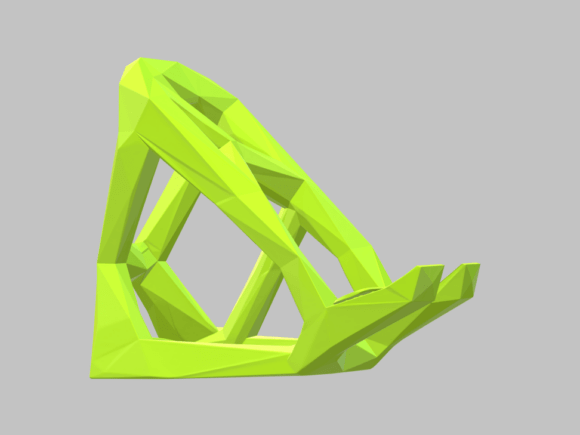
The concept behind this stand is rooted in the intersection of form and function. Unlike traditional plastic holders that often feel bulky or generic, this design utilizes an open-frame structure. This architectural choice not only reduces material usage but also maintains structural integrity through geometric efficiency. For professionals and hobbyists alike, the appeal lies in its ability to securely hold smartphones at a comfortable viewing angle, making it an ideal companion for desks, bedside tables, offices, and dedicated workspaces.
The Intersection of Aesthetics and Engineering
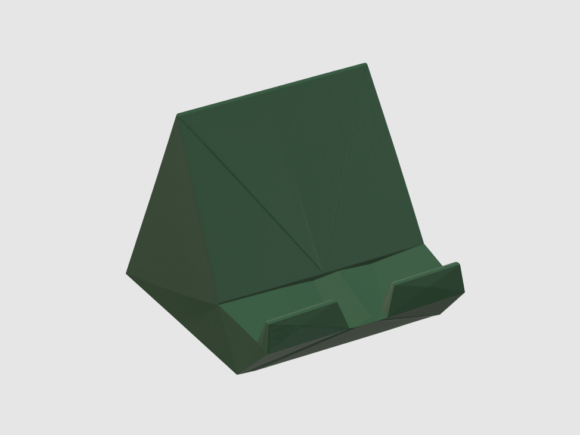
The visual language of the Modern Geometric Phone Stand is defined by its low-poly design. In the realm of 3D modeling and printing, low-poly refers to a style that uses fewer polygons to create shapes, resulting in a faceted, angular appearance. When translated into a physical object, this creates a striking interplay of light and shadow, giving the stand a dynamic look that changes depending on the lighting conditions of the room. It captures a futuristic vibe while adhering to the principles of minimalism, ensuring it does not overwhelm the user's desk setup.
Beyond aesthetics, the engineering of the stand prioritizes stability. The geometry is calculated to distribute weight evenly, allowing the device to rest securely even when interacting with the screen. This is crucial for users who might be using their phones for video calls, following recipes in the kitchen, or monitoring notifications during a workout. The open-frame construction is not merely a stylistic choice; it is a functional one. By removing unnecessary solid surfaces, the design reduces the overall mass of the object while preserving the strength needed to support modern, heavier smartphones. This balance makes it suitable for various scales, meaning the design can be printed in different sizes without losing its structural logic.
Optimizing the 3D Printing Workflow
One of the most compelling aspects of this design is its suitability for additive manufacturing. For the growing community of DIY enthusiasts, makers, and small business owners, the ease of production is just as important as the final product. The Modern Geometric Phone Stand is engineered specifically for fast and efficient 3D printing. Its geometry allows it to print cleanly without the need for complex supports, which significantly reduces post-processing time and material waste.
This characteristic makes it highly accessible for those new to 3D printing as well as experienced veterans looking for reliable prints. The design works exceptionally well with both PLA (Polylactic Acid) and PETG (Polyethylene Terephthalate Glycol). PLA offers a cost-effective solution for casual users who prioritize ease of printing and a smooth finish, while PETG provides enhanced durability and heat resistance, making the stand more robust for heavy daily use or environments with higher temperatures. The versatility in material selection ensures that the stand can be tailored to specific needs, whether for a lightweight home office setup or a rugged industrial environment.
Why Material Choice Matters
- PLA: Ideal for beginners and decorative setups. It is easy to print, biodegradable, and comes in a vast array of colors, allowing for customization that matches personal decor.
- PETG: Preferred for functional applications. It offers better layer adhesion and resistance to warping, ensuring the stand remains rigid and stable over long periods of use.
The reduction in material usage inherent in the open-frame design also aligns with sustainable practices. By minimizing the amount of filament required per unit, creators can produce more units with less resource consumption. This efficiency is particularly relevant for resellers who aim to offer eco-friendly products to their customers. The clean print quality means that the surface finish is often sufficient straight off the printer bed, reducing the need for sanding or painting and further streamlining the production workflow.
Diverse Applications Across Professional and Personal Spheres
The utility of the Modern Geometric Phone Stand extends far beyond simply holding a phone upright. Its adaptability makes it a valuable asset across a wide spectrum of scenarios. Understanding these use cases helps illustrate why this design has gained traction among diverse groups of people, from educators to remote workers.
For the Remote Professional
In the modern hybrid workplace, the home office has become a permanent fixture for many. Video conferencing requires hands-free operation to maintain eye contact with the camera while taking notes or referencing documents. The stand positions the smartphone at an optimal height and angle, eliminating the strain of holding the device or propping it up against unstable objects. The sleek, geometric look also adds a touch of sophistication to virtual backgrounds, projecting a professional image during client meetings.
For Content Creators and Resellers
Creators who produce content about technology, lifestyle, or productivity often need reliable props to showcase their gear. The unique low-poly aesthetic of the stand serves as an excellent visual anchor in photos and videos. Furthermore, because the design is optimized for 3D printing, it presents a viable opportunity for entrepreneurs. Small business owners can manufacture these stands locally, offering a niche product that combines fashion with function. The lack of complex supports simplifies the supply chain, allowing for rapid prototyping and quick turnaround times for custom orders.
For Educators and Researchers
In academic settings, the stand facilitates interactive learning. Teachers can use smartphones to display diagrams, conduct live polls, or stream educational videos without tying up their hands. Researchers observing experiments may find the stand useful for recording high-definition footage of processes that require a steady, fixed perspective. The stability of the design ensures that the recording does not waver, capturing clear data that would otherwise be lost with handheld recording.
For the Everyday Consumer
On a personal level, the benefits are equally significant. Placing the stand on a bedside table transforms the phone into a smart alarm clock, music player, or nightlight, keeping the device visible without being intrusive. During meal preparation, it acts as a hands-free guide for recipes, preventing cross-contamination risks associated with touching the screen with dirty hands. The minimalist design ensures it fits seamlessly into any interior style, from modern industrial to cozy Scandinavian.
Considerations for Implementation and Usage
While the Modern Geometric Phone Stand offers numerous advantages, successful implementation requires a thoughtful approach to placement and maintenance. The open-frame structure, while strong, relies on the friction between the phone's edges and the stand's contact points. Users should ensure that their devices do not have overly thick cases that might prevent a secure fit, although the design generally accommodates standard case thicknesses.
When printing the stand, orientation matters. Although the design minimizes the need for supports, printing the base flat on the build plate typically yields the best results for stability. For those utilizing resin printers instead of FDM (Fused Deposition Modeling), the geometric facets will appear even smoother, though care must be taken to remove support structures carefully to avoid damaging the delicate angles of the low-poly pattern.
Another consideration is the scale of the print. While the design works well at various scales, larger versions may require adjustments to wall thickness to maintain rigidity, especially if made from PLA. Conversely, smaller versions intended for keychains or travel kits must be printed with precision to ensure the phone does not slip out. Experimentation with infill density can also enhance the strength-to-weight ratio, allowing users to customize the durability based on their specific requirements.
The Future of Desktop Accessories
As we move forward, the demand for personalized, functional, and aesthetically pleasing accessories continues to rise. The Modern Geometric Phone Stand represents a shift away from mass-produced, homogenized goods toward items that reflect individual taste and environmental consciousness. The ability to print these stands at home empowers users to take control of their workspace organization, fostering a sense of creativity and self-reliance.
The trend towards low-poly designs in consumer electronics suggests that the fusion of digital art and physical utility is here to stay. As 3D printing technology becomes more accessible and materials improve, we can expect to see even more variations of this concept. From transparent filaments that highlight the internal geometry to composite materials that add texture and color, the potential for evolution is vast.
Ultimately, the value of this phone stand lies in its simplicity. It solves a common problem—how to hold a phone securely and stylishly—without adding complexity to the user's life. Whether you are a professional seeking to optimize your workflow, a creator looking for the perfect prop, or a hobbyist eager to test the limits of your 3D printer, the Modern Geometric Phone Stand offers a solution that is as practical as it is beautiful. By embracing this design, users can elevate their daily interactions with technology, turning a mundane task into a moment of appreciation for good design.
In conclusion, the integration of futuristic aesthetics with everyday functionality marks a new chapter in how we interact with our mobile devices. The Modern Geometric Phone Stand stands as a testament to what is possible when design thinking meets additive manufacturing. It invites us to reconsider the objects we keep on our desks, encouraging a space that is not only organized but also inspiring. As we continue to navigate a digital-first world, having tools that support our physical comfort and visual enjoyment becomes increasingly vital, and this stand delivers exactly that.