Evaluating the Witch on Pumpkin Halloween Decoration: A Digital Design Resource Analysis
Halloween decoration trends have shifted significantly in recent years, moving away from mass-produced plastic items toward personalized, handmade aesthetics. At the center of this shift is the Witch on Pumpkin Halloween Decoration, a motif that has become a staple for DIY enthusiasts and professional crafters alike. However, when sourcing the design files to create these decorations, buyers are often presented with complex digital packages containing multiple file formats. Understanding the technical specifications, material compatibility, and creative applications of resources like the "Witch with Broom on Pumpkin" laser cut and 3D print bundle is essential for making an informed purchasing decision.
This analysis explores the utility of multi-format digital art files for creating witch-themed decor. It evaluates how these specific design assets compare to traditional crafting methods, examines the tradeoffs between different fabrication technologies, and provides guidance on selecting the right approach for your skill level and available tools.
Understanding the Digital Asset Package
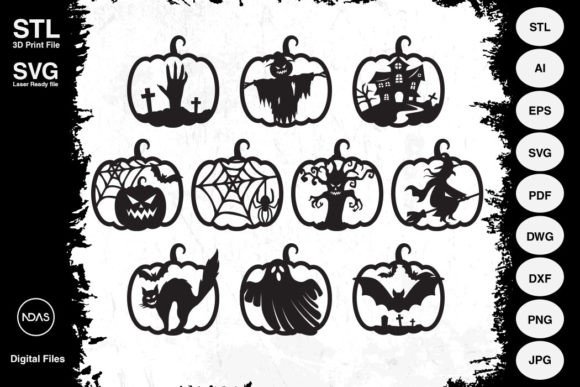
The core value proposition of modern Halloween decoration designs lies in their versatility. A typical high-quality download for a Witch on Pumpkin Halloween Decoration is not limited to a single format. Instead, it serves as a comprehensive toolkit for various manufacturing methods. The inclusion of STL, AI, SVG, EPS, PDF, DXF, DWG, PNG, and JPG files ensures that the design can be adapted to almost any creative workflow.
- Vector Files (AI, SVG, EPS, DXF, DWG): These are crucial for laser cutting, CNC routing, and vinyl cutting. They allow for infinite scaling without loss of quality, meaning you can resize a small ornament into a large yard sign while maintaining crisp edges.
- Raster Files (PNG, JPG): Useful for reference, printing directly onto materials, or use in graphic design software for further customization.
- 3D Model Files (STL): Essential for additive manufacturing via 3D printers, allowing for textured, three-dimensional objects rather than flat silhouettes.
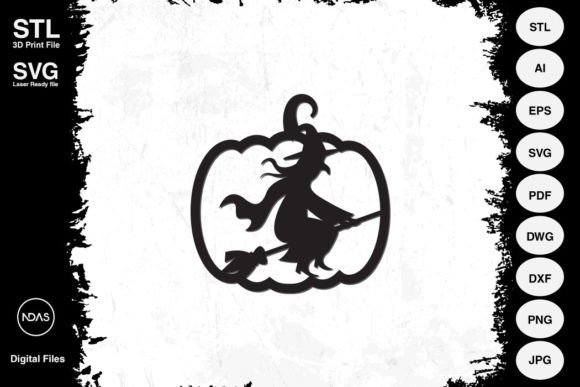
For the specific "Witch with Broom on Pumpkin" design, the dimensions are typically standardized at approximately 5 x 5 inches for 2D applications. For 3D printing, the footprint remains similar (X: 5, Y: 5), but the depth (Z-axis) is usually around 0.25 inches. While these base dimensions are practical for ornaments and small accents, the vector nature of the files allows users to scale them up or down to fit larger wreaths, door hangings, or table centerpieces.
Comparing Fabrication Methods: Laser Cutting vs. 3D Printing
When deciding how to bring a Witch on Pumpkin Halloween Decoration to life, the primary decision factor is the fabrication method. Each technology offers distinct advantages and limitations regarding cost, speed, and aesthetic outcome.
Laser Cutting and CNC Routing
Laser cutting is perhaps the most popular method for creating flat, intricate Halloween decor. Using vector files like SVG or DXF, a laser cutter can slice through materials such as plywood, MDF, acrylic, and cardboard with extreme precision. This method excels at producing detailed silhouettes, such as the delicate lace patterns often found on a witch’s hat or the bristles of her broom.
Strengths:
- Speed: Multiple pieces can be nested and cut simultaneously, making it efficient for batch production.
- Material Variety: Works well with wood, acrylic, paper, and thin metals.
- Clean Edges: Lasers seal the edges of plastics and burn wood slightly, which can add a rustic aesthetic or require sanding for a smooth finish.
Limitations:
- Two-Dimensional Output: Unless assembled into layers, the result is flat. It lacks the tactile depth of a 3D object.
- Equipment Access: Requires access to a laser cutter or CNC machine, which may involve membership fees for makerspaces or reliance on online services.
3D Printing
Using the included STL file, the same witch design can be rendered in three dimensions. Fused Deposition Modeling (FDM) or Stereolithography (SLA) printers build the object layer by layer. This approach transforms the silhouette into a tangible figurine or relief sculpture.
Strengths:
- Depth and Texture: Creates a fully realized object that can be viewed from all angles.
- Complex Geometry: Capable of printing overhangs and internal structures that laser cutting cannot achieve in a single piece.
- Material Properties: PLA, ABS, and resin offer different finishes, from matte to glossy, and varying durability.
Limitations:
- Time-Consuming: Printing a 5x5x0.25 inch object may take several hours depending on resolution and infill settings.
- Post-Processing: Supports must be removed, and surfaces may need sanding or painting to look professional.
- Cost Per Unit: Electricity and filament/resin costs make individual prints more expensive per unit than laser-cutting a sheet of wood.
Material Selection and Aesthetic Considerations
The choice of material dramatically influences the final look of your Witch on Pumpkin Halloween Decoration. Because the digital files support multiple media, creators can experiment with different textures and color palettes.
Natural Materials (Wood, Cardboard, Paper):
Plywood and MDF provide a warm, organic feel that pairs well with autumn themes. Light woods like basswood or birch contrast beautifully with black witch silhouettes, while darker woods like walnut offer a more sophisticated, gothic vibe. Cardboard and heavy paper are excellent for temporary indoor displays or children’s crafts due to their low cost and ease of handling.
Synthetic Materials (Acrylic, Plastic):
Clear or colored acrylic creates a modern, vibrant look. Black acrylic with white backing light can produce striking neon effects. Acrylic is also durable and weather-resistant, making it suitable for outdoor porch decorations if sealed properly.
Metal:
Thin sheets of metal, such as aluminum or steel, can be laser-cut to create industrial-chic decor. Metal adds weight and permanence to a decoration, ideal for garden stakes or door knockers.
Evaluating Tradeoffs and Decision Factors
Selecting the right approach requires balancing budget, time, and desired output quality. Below is a comparison of key decision factors.
- Budget Constraints: If you do not own a laser cutter or 3D printer, consider outsourcing. Laser cutting is generally cheaper for simple shapes, while 3D printing costs accumulate quickly due to print time. Buying pre-made physical items might be cheaper for one-off projects, but digital files offer unlimited reuse.
- Technical Skill Level: Laser cutting requires basic CAD knowledge to prepare files. 3D printing demands familiarity with slicing software (like Cura or PrusaSlicer) to manage supports and layer heights. Beginners may find paper cutting or cardstock assembly more accessible.
- Scale and Quantity: For a single ornament, hand-cutting with a craft knife using the PDF template is viable. For a set of twelve matching decorations, laser cutting or 3D printing becomes necessary for consistency and efficiency.
- Indoor vs. Outdoor Use: Paper and cardboard degrade quickly outdoors. Wood should be sealed. Acrylic and metal are superior for exterior durability. The digital file itself does not dictate durability; the material choice does.
When to Choose Digital Files Over Physical Products
While ready-made Witch on Pumpkin Halloween Decoration items are readily available in stores, digital files offer unique benefits that justify their purchase for many consumers.
Customization: Digital files allow for personalization. You can modify the witch’s pose, add names, or change the pumpkin’s expression using vector editing software before fabrication. This level of control is impossible with mass-produced goods.
Reusability: Once purchased, the files can be used year after year. There is no risk of damage during storage, and the design never goes out of style. You can also share or gift the files to friends and family.
Immediate Availability: Digital downloads are instant. There is no shipping wait time, which is advantageous for last-minute Halloween preparations.
However, digital files are not the right choice for everyone. If you lack the tools to fabricate the design, or if you prefer the convenience of picking up a finished item at a store, purchasing a physical decoration is more practical. Additionally, those who struggle with technical setup may find the learning curve of 3D printing or laser software frustrating.
Best Practices for Implementation
To ensure success with your chosen fabrication method, follow these best practices:
- Check File Compatibility: Ensure your software (Adobe Illustrator, Inkscape, TinkerCAD, etc.) can open the provided formats. SVG and DXF are widely compatible.
- Test Cuts: Always perform a test cut on scrap material to adjust laser power/speed or 3D printer temperature settings.
- Consider Assembly: Complex designs may require gluing multiple layers together. Plan your assembly sequence before starting.
- Finish and Protect: Sand wood edges, apply sealant for outdoor use, or paint 3D prints for a polished look. Unfinished edges can detract from the overall quality of the decoration.
Conclusion
The Witch on Pumpkin Halloween Decoration digital asset represents a flexible solution for holiday crafting. By offering both 2D vector and 3D model formats, it caters to a wide range of creators, from casual hobbyists to professional designers. The decision to use this resource depends largely on your access to fabrication tools, your desired aesthetic, and your tolerance for technical complexity. Whether you choose to laser-cut a sleek acrylic silhouette or 3D print a textured wooden figure, the availability of high-quality, scalable files empowers you to create distinctive, personalized Halloween decor that stands out from generic store-bought options.