Christ with Dove: A Low-Poly 3D Model for Contemporary Faith Art
In the evolving landscape of digital art and physical manufacturing, the intersection of traditional religious symbolism and modern geometric design has produced some of the most compelling visual works available today. One such standout is the Christ with Dove low-poly 3D model. This piece represents a significant departure from hyper-realistic statues or classical oil paintings, offering instead a striking interpretation that relies on angular volumes, faceted surfaces, and structural clarity. For collectors, artists, and designers evaluating options for decorative prints or custom projects, understanding the unique attributes of this model is essential.
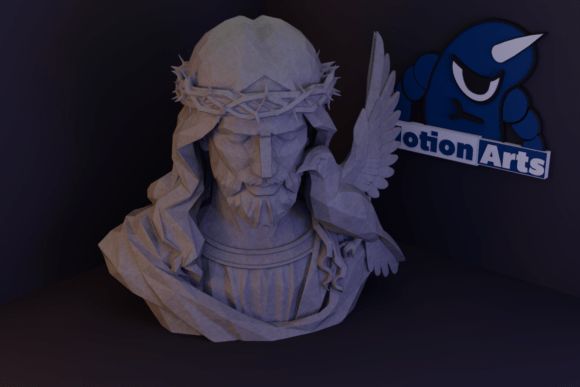
The core concept of Christ with Dove centers on a serene figure with a contemplative gaze, adorned in a crown of thorns and robes defined by well-geometric planes. The composition is enriched by a dove perched on the shoulder, its wings open to introduce movement and symbolize peace. This specific arrangement creates a narrative that is both immediate and deep, suitable for those seeking to blend faith with contemporary aesthetics. Unlike traditional representations that prioritize soft textures and lifelike skin tones, this model embraces the "low-poly" aesthetic, where the beauty lies in the visible geometry itself.
Distinguishing Features of the Low-Poly Aesthetic
What makes the Christ with Dove model distinct from other religious art pieces is its deliberate reduction of form. In standard 3D modeling, high polygon counts are often used to smooth out edges and create organic curves. However, this model utilizes a lower polygon count to maintain sharp, readable shapes. The result is a design that explores angular volumes, creating a modern and elegant look that stands out in any environment.
This approach offers several practical advantages:
- Visual Impact: The faceted surfaces catch light in dynamic ways, creating shadows and highlights that change as the viewer moves around the object. This adds a layer of interactivity to the artwork without requiring motion.
- Structural Stability: By designing with good readability of shapes in mind, the model ensures structural integrity. This is particularly important for 3D printing, where complex overhangs or thin details can lead to failure during the post-processing phase.
- Sophisticated Finish: The geometric style lends itself well to various finishing techniques, from matte paints that emphasize the planes to metallic finishes that highlight the facets.
The presence of the dove is not merely an accessory but a critical element of the composition. With open wings, the bird adds a sense of upward movement and spiritual significance, balancing the heavy symbolism of the crown of thorns. This duality—peace amidst suffering—is captured effectively through the contrast between the rigid, angular body of Christ and the fluid, winged posture of the dove.
Evaluating Alternatives and Design Approaches
When considering religious decoration or artistic pieces, individuals often weigh multiple options before making a final decision. To understand where Christ with Dove fits, it is helpful to compare it against common alternatives in the market.
Traditional Realism vs. Geometric Abstraction
Traditional religious art typically aims for realism, utilizing high-resolution textures and soft lighting to evoke emotional resonance through familiarity. While powerful, these pieces can sometimes feel static or overly familiar in modern interiors. In contrast, the low-poly style of Christ with Dove offers abstraction. It invites the viewer to engage with the form intellectually, appreciating the construction of the image rather than just the subject matter. This makes it ideal for contemporary spaces that might find classical statues too ornate or outdated.
Standard 3D Printing vs. Intermediate Level Models
For those interested in producing this model via 3D printing, the difficulty level is a crucial factor. Many entry-level models are designed for absolute beginners, featuring simple shapes that lack detail. Conversely, highly complex models intended for professional studios may require advanced support structures and extensive post-processing. The Christ with Dove model is positioned at an intermediate level. It requires a certain degree of technical skill to print successfully but rewards the user with an expressive and striking result. This balance makes it accessible to hobbyists who have moved beyond basic cubes and spheres but are not yet ready for industrial-grade complexity.
Physical Prints vs. Digital Assets
Another consideration is the medium of consumption. Some users prefer purchasing high-quality digital prints or posters. While these offer convenience, they lack the tactile dimension of a physical 3D printed object. The low-poly nature of this model shines when rendered physically. The play of light across the geometric planes is something that cannot be fully replicated on a flat screen. Therefore, if the goal is to create a centerpiece for a contemplative environment, the physical manifestation of the model is generally superior to a digital file or a standard photograph.
Strengths, Tradeoffs, and Decision Factors
Selecting the right artistic resource involves weighing strengths against potential limitations. The Christ with Dove model excels in specific scenarios but may not be the perfect fit for every situation.
Key Strengths
The primary strength of this model is its versatility. It serves equally well as a standalone decorative print, a component of a thematic collection, or a custom project for religious institutions. The design maintains excellent results after post-processing and painting, allowing for customization that respects the original geometry while adding personal flair. Furthermore, the symbolic depth of the dove and the crown of thorns ensures the piece resonates with audiences regardless of their specific theological background, focusing on universal themes of peace and sacrifice.
Potential Tradeoffs
However, there are tradeoffs to consider. The low-poly aesthetic, while modern, may not appeal to traditionalists who prefer smooth, classical forms. Additionally, because the model relies on geometric definition, poor lighting in a display area can flatten the image, causing the facets to lose their impact. Finally, the intermediate difficulty level means that users must invest time in learning proper slicing settings and support generation to ensure the delicate features, such as the dove's wings, remain intact.
Best-Fit Situations and Use Cases
Understanding when to choose this model over others is key to a successful outcome. The Christ with Dove 3D model is particularly well-suited for the following scenarios:
- Contemporary Religious Spaces: Churches, chapels, or prayer rooms looking to modernize their decor without losing spiritual significance will find this model effective. Its clean lines complement minimalist architecture better than baroque-style statues.
- Artistic Collections: Collectors of modern religious art or 3D printed sculptures will appreciate the sophisticated finish and the way the model combines faith with contemporary design trends.
- Educational Projects: For students or enthusiasts studying the intersection of geometry and art, this model provides a practical example of how low-poly techniques can convey complex emotions and narratives.
- Custom Thematic Displays: Those creating themed environments, such as event backdrops or museum exhibits focused on spirituality, can utilize the strong visual impact of the faceted surfaces to draw attention.
When to Consider Other Options
While the model is highly versatile, it is not the only solution. If the goal is to create a piece that mimics the texture of real fabric or skin with photorealistic accuracy, a high-poly sculpt would be a more appropriate choice. Similarly, if the user lacks access to 3D printing equipment or the skills to handle intermediate-level files, purchasing a pre-made physical statue or a high-resolution digital render might be more practical. Additionally, for applications requiring extreme durability in harsh outdoor environments, the fine details of the dove's wings might be vulnerable unless reinforced or cast in specific materials.
Making an Informed Choice
The decision to incorporate Christ with Dove into a project ultimately depends on the desired aesthetic and the capabilities of the creator. It is a piece that demands a certain appreciation for the beauty of structure and the power of simplification. By choosing a model that prioritizes angular volumes and faceted surfaces, creators can produce work that feels fresh and relevant while honoring timeless symbols.
Whether used for religious decoration, contemplative environments, or purely artistic expression, this model offers a unique opportunity to explore the boundaries of 3D design. It challenges the viewer to see the divine not just through softness and light, but through the solid, enduring geometry of faith. For those willing to navigate the intermediate requirements of printing and finishing, the reward is a sophisticated, meaningful artifact that bridges the gap between ancient tradition and modern innovation.
Ultimately, the success of the project lies in the execution. Proper lighting, careful post-processing, and thoughtful placement will determine whether the Christ with Dove model achieves its full potential as a striking piece of art. By understanding the nuances of this design, users can make informed decisions that align with their creative vision and functional needs.